
On a recent trip to a remote forest in Kaveri Wildlife Sanctuary, I was not even thinking about wildlife photography. The agenda was to capture the serene landscape of a gushing river surrounded by lush greenery and mountains.
This forest has a very low animal density and that gave me no reason to unpack my wildlife camera. As the sun gave way to the monsoon clouds and the landscape shoot ended, we packed our cameras to head home, a three-hour drive away.
And then it happened.
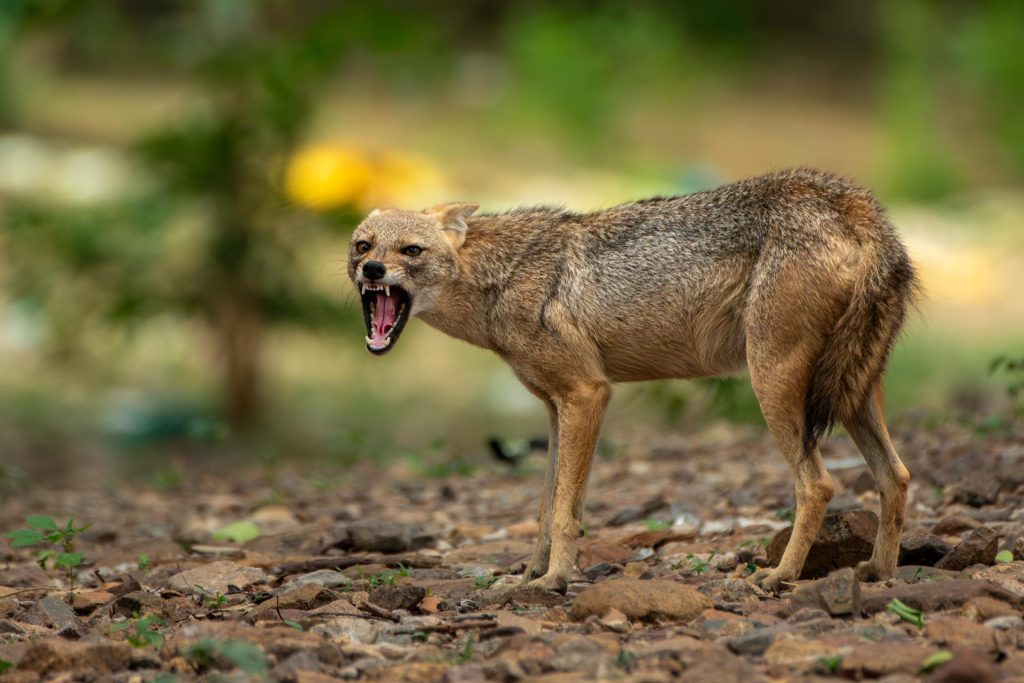
Two juvenile mammals moved near the riverbed, under dense trees. At first, I thought they were stray dogs from the nearby temple.
But something felt off. Observing closely, I noticed their coat, posture, and behavior. For a moment, they looked like juvenile Dholes.
It became clear later that we were watching something special — two juvenile Indian jackals.
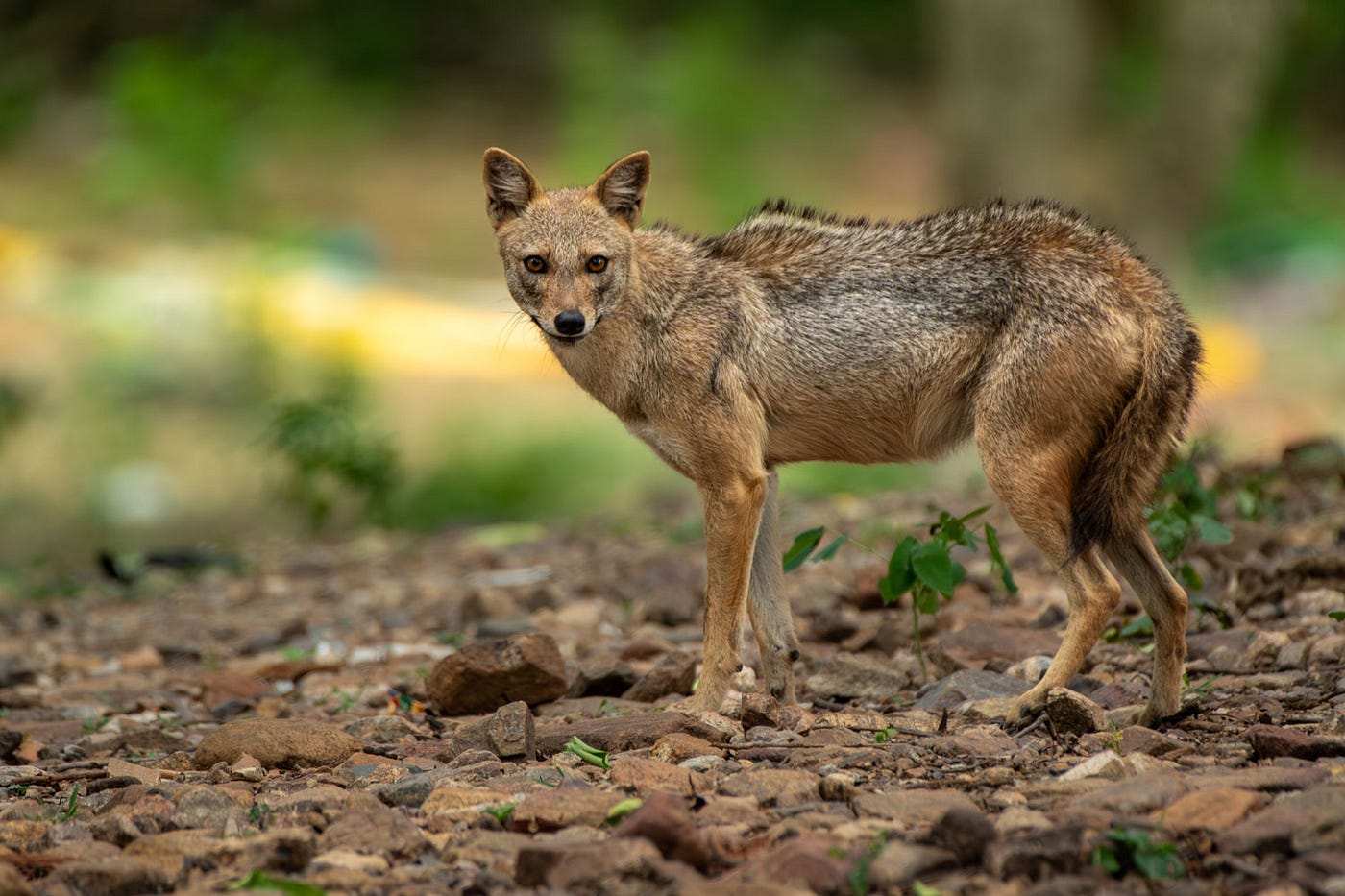
Jackals are rare in South Indian forests due to a small population. It is a shy species that is sensitive to human presence. Usually, they scurry away.
But not this time. The two were not just present, they were unbothered by our presence and completely focused on something else.
They were visibly agitated. One of them kept crouching low and baring its sharp canines. Another circled slowly and showed off its open jaw even more aggressively.
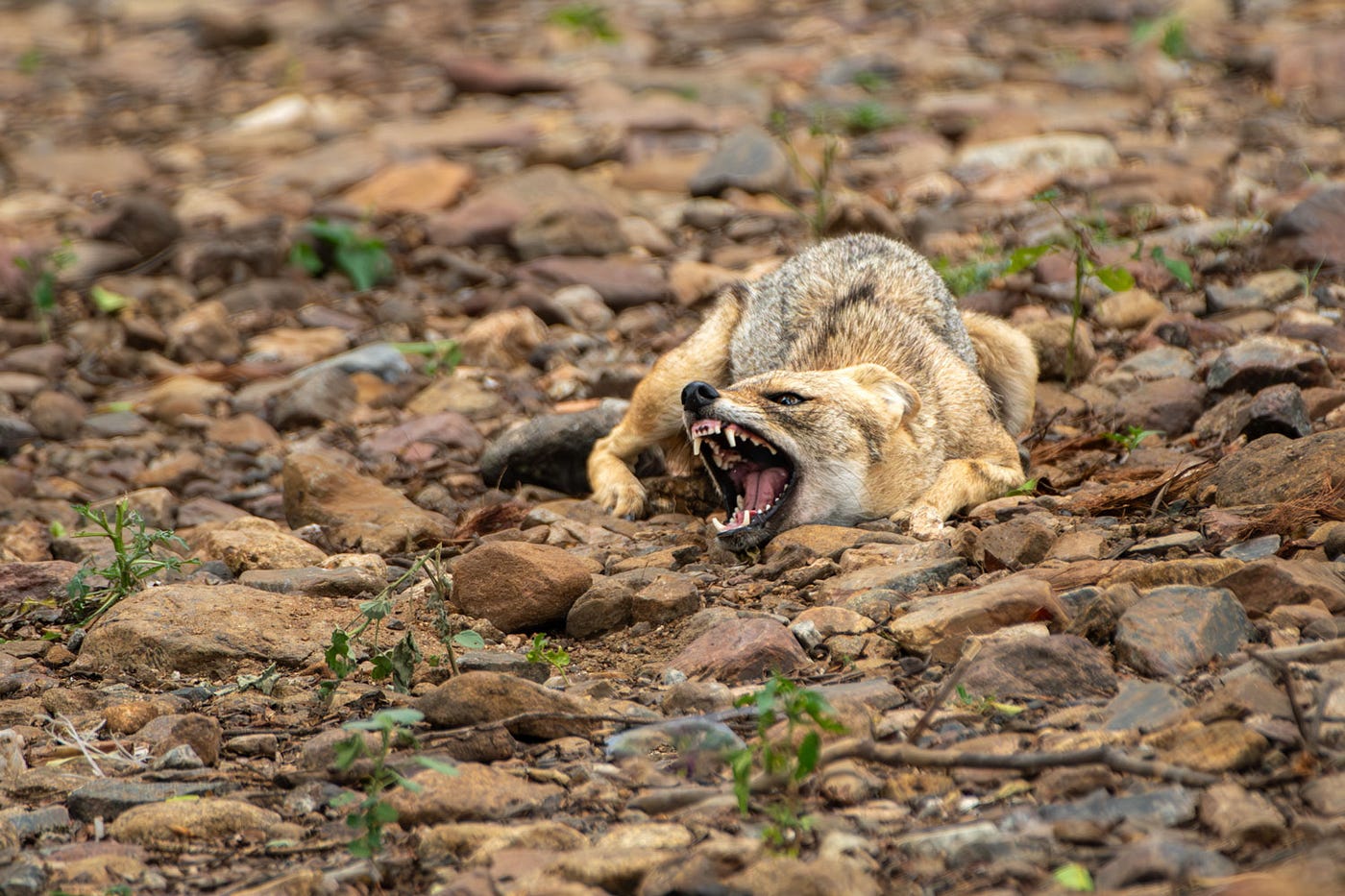
I was still on foot. Then I noticed a stray dog that somehow got too close. It found me and circled around me, refusing to leave. That’s when everything made sense.
The jackals were defending their territory.
The stray dog must have walked into it unknowingly. The jackals would not let it pass without making a statement.
It was intense. Wild. Unexpected. And I had no time to think.
I rushed to the car, pulled out my wildlife camera, and did not bother to fix the lens hood.
You don’t waste time on moments like these. Moments like this don’t last long, so I was hoping I wasn’t already too late.
The light was poor and the jackals were under the dense canopies. I quickly kneeled down to align at eye-level and started shooting. You don’t get to photograph mammals at eye level often since you’re usually in a safari vehicle.
There was no time to preview the images on the camera’s screen. I trusted my years of experience, made quick adjustments to the camera settings, and kept shooting, hoping I wouldn’t be grossly disappointed.
Honestly, I wasn’t expecting much in such low light, but I hoped for at least a decent picture.
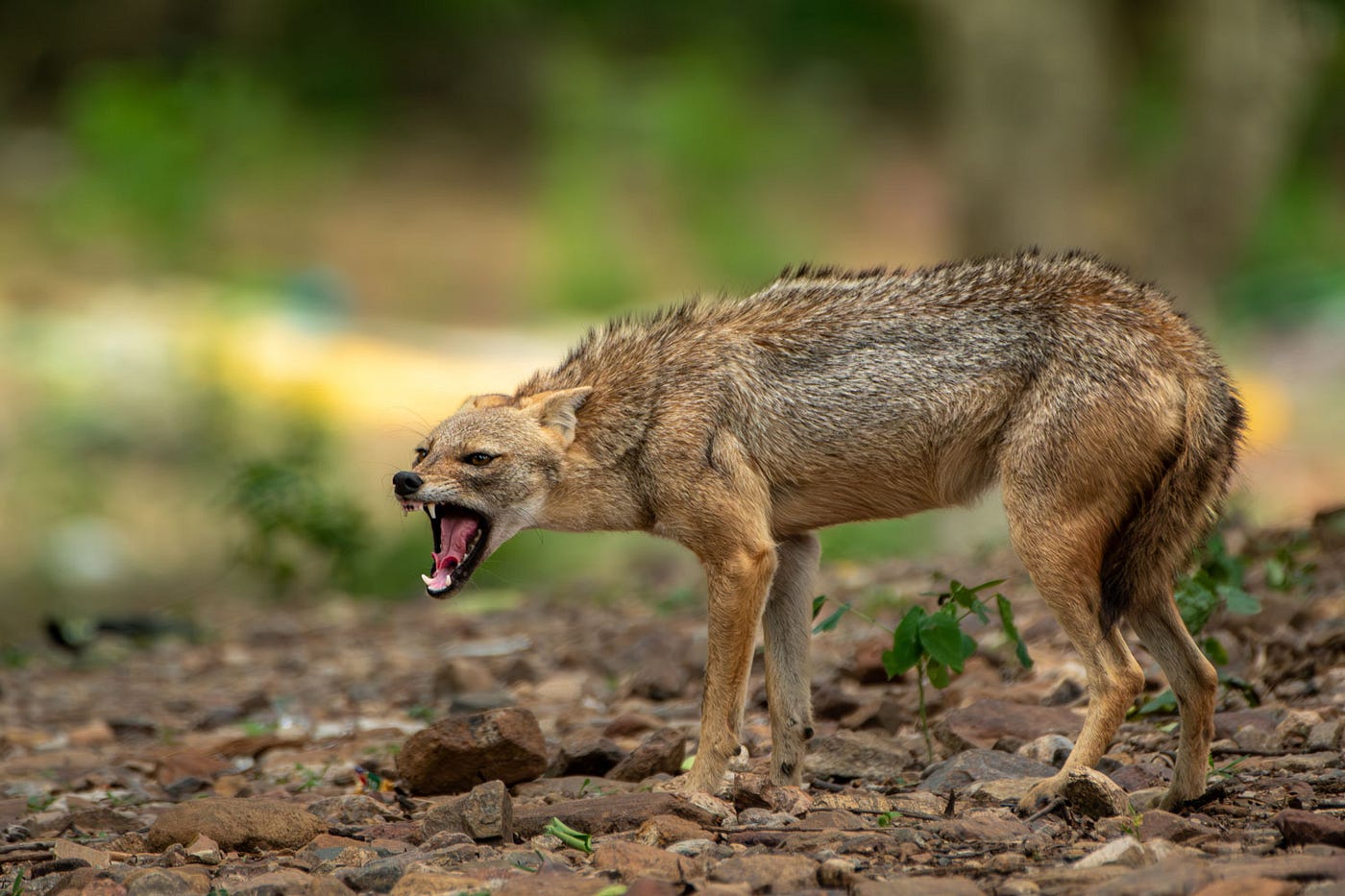
But when I finally sat down and scanned through the images on my computer, I knew I had hit jackpot.
What I captured wasn’t just an animal. It was raw emotion. Territorial aggression. A glimpse into the less-frequently seen behavior of one of South India’s most elusive mammals.
The uncertainty of that moment revealed a portrait of power. A territorial standoff.
And above all, a reminder that the best frames are often the ones you never planned for.